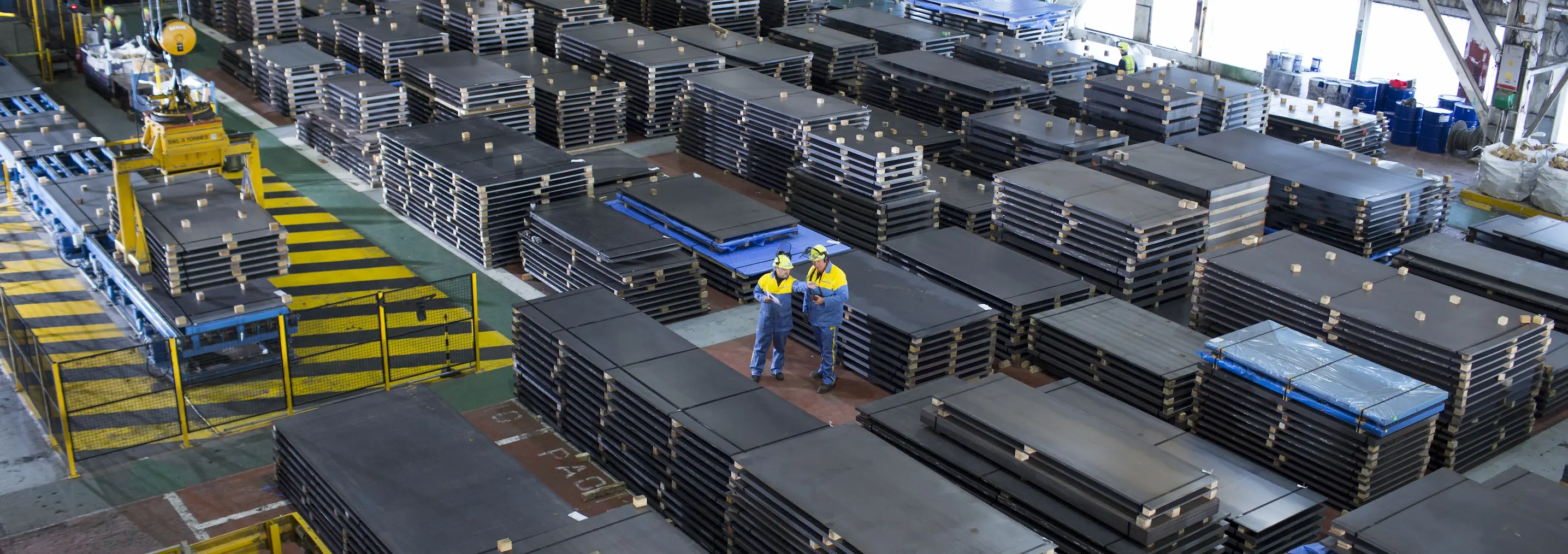
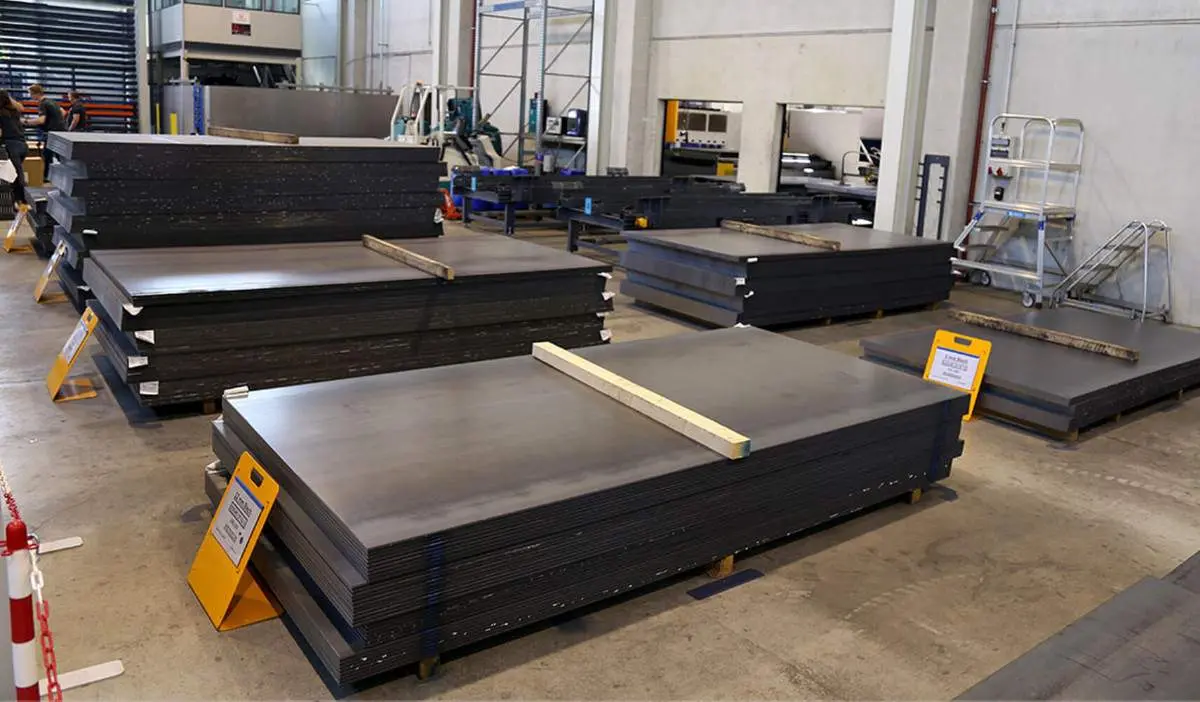
Clad plates, clad pipes, fittings, flanges and tube sheets — a corrosion-resistant alloy bonded onto
a carbon or alloy steel base, so the process side gets the alloy and the steel carries the load.
Product Overview
Alloy Where It Is Needed, Steel Where It Counts
Cladding is a metallurgical process that bonds a layer of one metal onto a base metal of a
different type, to improve properties such as corrosion or wear resistance. We supply
clad plates, clad pipes, clad fittings, overlay flanges and clad tube sheets with
stainless steel, duplex, nickel alloy, titanium and copper-nickel cladding on carbon steel and
chromium-molybdenum alloy steel.
The clad layer faces the process fluid and gives the vessel or pipe the chemistry of the alloy;
the steel backing gives it strength at a fraction of the cost of solid alloy. Products are supplied
to ASTM A263, A264, A265, B898 and API 5LD, with the bond proved by shear testing and ultrasonic
examination and reported on a mill test certificate to EN 10204 Type 3.1 or 3.2. When your project
needs independent verification, inspection by your nominated agency is carried out before dispatch.
How the alloy is joined to the base decides the thickness it can be, the metals it can join and the shapes it suits. Each drawing shows the process in section.
Roll bonding
Passes cleaned metal layers through heavy rollers under high pressure to physically bond the sheets together. The pack is heated first, so pressure and heat produce a diffusion bond across the whole plate.
Best for: large stainless and nickel-alloy clad plates in thin and medium thicknesses.
Explosive bonding
Uses a controlled chemical explosion to drive one metal plate into another at high speed, creating a solid-state weld without a heat-affected zone. The collision jet scours both surfaces and leaves a wavy, fully metallurgical bond.
Best for: thick plates, tube sheets, and metals that cannot be fusion welded, such as titanium on steel.
Laser cladding
Utilises a high-powered laser beam to melt metal powder or wire onto a substrate, offering precise control and minimal heat distortion. Dilution with the base is low, so a thin layer already has the full alloy chemistry.
Best for: wear-resistant hardfacing, shafts, seats and the repair of worn components.
Weld cladding
Deposits a corrosion-resistant alloy layer over a carbon steel surface using traditional welding methods such as GTAW or GMAW, or strip electrodes by SAW and ESW. Two or more layers control dilution so the surface meets the alloy chemistry.
Best for: nozzles, flanges, pipe bores, vessel internals and local areas of any shape.
Anatomy of a Clad Plate
Two Metals, One Plate
A clad plate is specified by three things: the base metal and its thickness, the cladding
alloy and its thickness, and the standard the bond is tested to. The clad face is the process
side; the base is sized for the design pressure as if the cladding were not there.
Base metal
Carbon steel such as A516 Gr. 70, or Cr-Mo alloy steel such as A387 for hydrogen and high-temperature service
Cladding
Stainless steel, duplex, nickel alloys, titanium or copper-nickel, 1.5 to 10 mm thick
Bond line
A solid-state or fusion bond across the whole area, proved by shear test and ultrasonic examination
Corrosion allowance
Taken in the clad layer; the base carries no allowance when the cladding is counted as a barrier only
Marking
Clad face identified on every plate, with heat numbers of both base and clad metal
Example: ASTM A264, SS 316L on A516 Gr. 70, 3 mm clad + 22 mm base, 2,000 × 6,000 mm.
Thickness: state base and clad separately, or the total with the minimum clad thickness.
Bond: name the ultrasonic acceptance level to ASTM A578 and whether the full plate is to be scanned.
Supplementary: corrosion tests, impact tests on the base, or simulated post-weld heat treatment.
Product Forms
Cladding in Every Shape the Line Needs
Plate is where cladding starts, but a clad vessel also needs clad nozzles, flanges and tube sheets, and a clad pipeline needs clad pipe and fittings. We supply the set.
Clad Plate
A263 · A264 · A265 · B898
Roll or explosion bonded plate for vessel shells, heads, columns and tanks, in standard and cut-to-size formats.
Clad Pipe
API 5LD · metallurgically clad or lined
Line pipe with a corrosion-resistant alloy bore, for sour gas, injection and subsea flowlines.
Clad Fittings
B16.9 · from clad plate or overlaid
Elbows, tees and reducers formed from clad plate or overlaid in the bore, to match the clad pipe.
Overlay Flanges & Nozzles
B16.5 · overlay on face and bore
Weld neck flanges and long weld neck nozzles with the alloy weld-overlaid on the bore and gasket face.
Clad Tube Sheets
Explosion bonded · drilled to drawing
Thick tube sheets and channel covers with alloy or titanium on the tube side, for heat exchangers and condensers.
Cladding thickness
1.5 to 10 mm. Roll bonded plate is usually 1.5 to 4 mm; explosion bonded plate and tube sheets can carry 5 to 10 mm or more.
Total thickness
Roll bonded plate from 5 to about 100 mm; explosion bonded plate from 10 mm to 200 mm and above for tube sheets.
Plate size
Widths to 4,000 mm and lengths to 12,000 mm, depending on the mill. Larger areas are made up from welded plates.
Materials
Cladding Alloys and the Steels They Go On
The cladding alloy is chosen for the process fluid; the base steel for the pressure, temperature and code. These are the combinations asked for most.
Cladding alloy
UNS
Clad plate standard
Usual base steel
Where it is used
Stainless steel
SS 304L
S30403
A264
A516 Gr. 70
General chemical, water and food-plant vessels.
SS 316L
S31603
A264
A516 Gr. 70
Chloride-bearing process, pharmaceutical and coastal plants.
SS 317L
S31703
A264
A516 Gr. 70
Flue-gas desulphurisation, pulp and paper.
SS 321 / 347
S32100 / S34700
A264
A387 Gr. 11 / 22
Hydroprocessing reactors and high-temperature refinery vessels.
SS 410S / 405
S41008 / S40500
A263
A387 Gr. 11 / 22
Crude and vacuum columns in sulphur-bearing service.
SS 904L
N08904
A264
A516 Gr. 70
Sulphuric and phosphoric acid plant.
Duplex stainless steel
Duplex 2205
S32205
A264
A516 Gr. 70
Chloride service with higher strength; pressure vessels and tanks.
Nickel alloys
Inconel 625
N06625
A265
A516 Gr. 70 · API 5L
Sour gas, seawater and flue gas; clad pipe and overlay.
Incoloy 825
N08825
A265
A516 Gr. 70 · API 5L
Sour service, sulphuric and phosphoric acid.
Monel 400
N04400
A265
A516 Gr. 70
Hydrofluoric acid, HF alkylation and seawater.
Hastelloy C276
N10276
A265
A516 Gr. 70
Wet chlorine, mixed acids and incinerator scrubbers.
Nickel 200
N02200
A265
A516 Gr. 70
Caustic soda evaporators and concentrators.
Titanium & copper alloys
Titanium Gr. 1 / 2
R50250 / R50400
B898
A516 Gr. 70
Chlor-alkali, PTA plants, desalination and seawater condensers.
Copper-Nickel 90/10
C70600
B432
A516 Gr. 70
Seawater tube sheets, water boxes and marine heat exchangers.
Copper
C11000 / C10200
B432
Carbon steel
Electrical conductors, bimetal strip and coinage blanks.
Swipe the table sideways to see every column
Base metals
Base steel
Used for
A516 Gr. 60 / 70
Pressure-vessel carbon steel; the standard backing plate
A387 Gr. 11 / 12 / 22
Cr-Mo steel for hydrogen service and high temperature
A537 Cl. 1 / 2
Higher-strength vessel steel for thick walls
A36 · A283 Gr. C
Tanks and structures at low pressure
API 5L X52 – X65
Line pipe for clad and lined pipelines
A105 · A350 LF2
Forged flanges and nozzles for weld overlay
How to choose the combination
Pick the cladding for the fluidThe same alloy you would use for solid construction: 316L for chlorides, 625 for sour gas, titanium for seawater.
Pick the base for the codeA516 for most vessels; A387 where hydrogen or high temperature calls for Cr-Mo steel.
Size the base for pressureThe cladding is normally a corrosion barrier only, so the base alone carries the design load.
Set the clad thicknessEnough for the corrosion allowance plus what is lost when the clad side is prepared for welding; 3 mm is a common minimum.
These are the combinations asked for most, not the limit of what we supply. Zirconium, tantalum, aluminium and other alloy claddings are sourced against your specification. For solid alloy plate and pipe, see Materials & Grades.
Standards
What the Clad Plate Standards Require
Each ASTM clad plate specification covers one family of cladding metal. All of them call for a bond shear test, and all of them take the base metal from its own plate specification.
Standard
Covers
What it calls for
ASTM A263
Stainless chromium steel-clad plate (400 series, such as 405 and 410S)
Bond shear strength 140 MPa min; bend tests; chemistry of the cladding; base to its own specification.
ASTM A264
Stainless chromium-nickel steel-clad plate (300 series and duplex)
As A263; the most common clad plate specification for process vessels.
Bond shear strength 140 MPa min; bend tests; cladding chemistry to the ASTM B specification of the alloy.
ASTM B898
Reactive and refractory metal clad plate (titanium, zirconium, tantalum, niobium)
Explosion-bonded plate; shear strength 140 MPa min; ultrasonic examination of the full bond area.
ASTM B432
Copper and copper-alloy clad steel plate
Bond test and cladding chemistry; used for copper-nickel tube sheets and electrical products.
ASTM A578
Straight-beam ultrasonic examination of plain and clad steel plates
Grid or full scan of the bond; acceptance Level A, B or C, or a supplementary level, stated on the order.
API 5LD
CRA clad or lined steel pipe
Metallurgically clad or mechanically lined line pipe; base pipe to API 5L, CRA layer to its own specification.
ASME VIII Div. 1, Part UCL
Pressure vessels made of clad plate or with corrosion-resistant lining
Design rules for clad vessels, including when the cladding may be credited for strength.
NACE MR0175 / ISO 15156
Materials for sour oil and gas service
Limits on the alloy, hardness and condition of the cladding and overlay in sour service.
Swipe the table sideways to see every column
Clad plate is also supplied to EN 10204 inspection documents and to project specifications that add impact tests on the base, corrosion tests on the cladding or simulated post-weld heat treatment of the bond.
Bond Testing & Documents
The Bond Is Proved, Not Assumed
A clad product is only as good as the bond between its two metals. These tests are made on every lot or arranged when your order calls for them.
MTC EN 10204Type 3.1 & 3.2, base and clad metal
Bond Shear Test140 MPa minimum, ASTM A264 / A265
Ultrasonic TestBond integrity to ASTM A578
Bend TestClad side and base side in tension
PMI & ChemistryCladding and overlay at specified depth
Corrosion TestsIGC to ASTM A262, pitting to G48
Shear test
A specimen is machined so the clad layer can be pushed off the base in a fixture. The force at failure divided by the bond area gives the shear strength, which must be at least 140 MPa (20 ksi).
Ultrasonic examination
The plate is scanned from the base side on a grid or over the full area. Any area that fails to return the back-wall echo is unbonded and is mapped and sized against the acceptance level.
Weld overlay checks
Overlay is examined by dye penetrant, its chemistry is checked at the specified depth below the surface, and ferrite is measured on stainless overlays to control cracking.
Anywhere a thick section must resist corrosion or wear on one face only, cladding gives the alloy surface at the cost of a steel body.
Pipes & Pressure Vessels
Protecting industrial pipes and pressure vessels against harsh chemicals and natural gas. Clad reactors, separators and sour-gas flowlines put nickel alloy or stainless on the wetted side of a carbon steel shell.
Heat Exchangers & Tube Sheets
Explosion-clad tube sheets and channel covers carry titanium, copper-nickel or stainless on the tube side, matched to the tubes, with a thick steel body for the pressure.
Columns, Reactors & Tanks
Refinery crude columns, hydroprocessing reactors and chemical storage tanks, where 410S, 347 or 316L cladding on carbon or Cr-Mo steel resists the process at a fraction of solid alloy cost.
Desalination & Seawater
Titanium-clad evaporator shells and copper-nickel clad water boxes for desalination plants, power-station condensers and offshore cooling systems.
Repair of Worn Components
Repairing worn aerospace and automotive components. Laser and weld cladding rebuild shafts, seats, turbine parts and dies with a hard or corrosion-resistant layer, restoring size with little distortion.
Coinage & Bimetal Strip
Manufacturing layered coins like US quarters using different metal combinations. Roll-bonded copper-nickel on copper strip also makes electrical contacts and thermostatic bimetal.
Selection
Which Cladding Process for Which Job?
A starting point for choosing the process and the product form. The cladding alloy follows the fluid; the base follows the code.
Situation
Typical choice
Why
Vessel shells and heads in corrosive service
Roll-bonded clad plate
Large plates with uniform, thin cladding at the lowest cost per square metre.
Titanium, zirconium or tantalum on steel
Explosion-bonded clad plate
These metals cannot be fusion welded to steel; the solid-state bond has no heat-affected zone.
Tube sheets and thick blocks
Explosion-bonded
Bonds thick cladding to very thick bases, and the bond survives drilling and tube expansion.
Nozzles, flanges and pipe bores
Weld overlay
Applied locally to any shape; the overlay is continuous with the clad plate at the joints.
Worn shafts, seats and dies
Laser cladding
Low heat input and precise placement rebuild the part with minimal distortion.
Sour-gas flowlines and risers
Clad or lined pipe, API 5LD
Inconel 625 or 825 on the bore of carbon steel line pipe, with matching clad fittings.
Hydrogen service at high temperature
SS 347 on A387 Cr-Mo
Stabilised stainless resists the process; the Cr-Mo base resists hydrogen attack.
Low-pressure tanks and large flat areas
Roll-bonded 304L / 316L
The thinnest economical cladding on an inexpensive base.
Small quantity or thick alloy wall needed
Solid alloy plate
Below a certain thickness or area, solid plate is simpler and cheaper than cladding.
Swipe the table sideways to see every column
This guide is for orientation only. The choice of cladding alloy, process and thickness depends on the full service conditions and the governing design code, and remains the responsibility of the design engineer.
Questions Buyers Ask
Cladding, Explained
What is cladding, and how is it different from coating or plating?
Cladding is a metallurgical process that bonds a layer of one metal onto a base metal of a different type. The clad layer is a solid metal sheet or weld deposit, usually 1.5 mm or more thick, joined to the base across its whole area so the two behave as one plate. A coating or plating is a thin surface film, typically a fraction of a millimetre, that is applied to the surface rather than bonded through it, and it offers no structural contribution.
Why use clad plate instead of solid alloy plate?
Cost and strength. The alloy is only needed on the surface that touches the process fluid, so a clad plate puts a thin layer of alloy there and uses carbon or alloy steel for the rest of the thickness. The alloy layer is typically 10 to 20 percent of the total thickness, so a thick vessel wall costs far less than solid alloy while the steel backing carries the pressure load. See the anatomy of a clad plate.
What is the difference between roll bonding, explosion bonding and weld overlay?
Roll bonding passes cleaned metal layers through heavy rollers under high pressure and heat so the sheets bond together; it suits large plates in stainless and nickel alloys. Explosion bonding uses a controlled explosion to drive one plate into another at high speed, creating a solid-state weld without a heat-affected zone; it suits thick plates and metals that cannot be fusion welded, such as titanium on steel. Weld overlay deposits a corrosion-resistant alloy over a steel surface using welding processes such as GTAW or GMAW, and suits nozzles, flanges, pipe bores and local areas. Laser cladding melts powder or wire onto the surface with a laser for precise, low-distortion deposits and repairs. See the techniques.
How is the bond of a clad plate tested?
The clad plate standards require a shear test, in which the clad layer is pushed off a small specimen; ASTM A263, A264, A265 and B898 all require a minimum bond shear strength of 140 MPa (20 ksi). The whole bond area is also examined ultrasonically to ASTM A578, which maps any unbonded areas, and bend tests show that the bond survives forming. Results are reported on the mill test certificate. See bond testing.
Can clad plate be cut, formed and welded?
Yes. Clad plate is cut, rolled and pressed like ordinary plate, with the clad side protected from contamination by carbon steel. Welding is done in two stages: the clad layer is stripped back along the joint, the steel backing is welded with carbon steel consumables, and the clad side is then restored with a weld overlay in the matching alloy, so the corrosion-resistant surface is continuous across the joint.
What documents are supplied with cladding products?
Every lot is supplied with a mill test certificate to EN 10204 Type 3.1 or 3.2 that reports the chemistry and mechanical properties of the base metal and the clad metal, the bond shear strength and the ultrasonic examination of the bond, together with any additional tests ordered, such as the chemistry of the overlay at a specified depth, ferrite content or corrosion tests. When third-party inspection is called for, the agency's inspection release note is included. More on our quality & inspection page.
Complete the Vessel
Everything That Goes With Clad Plate
Solid alloy plate for the thin sections, pipe and fittings for the nozzles, and flanges to close the joints — all from one supplier with one set of documents.
Send the product form, base metal, cladding alloy, thicknesses and size. We will confirm the process and availability and quote, with the bond testing, mill test certificate and inspection you require.