
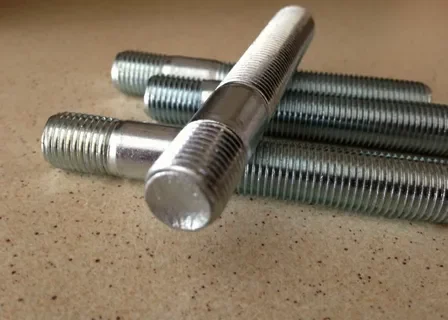
Stud Bolt
A rod threaded along its full length, fitted with a heavy hex nut at each end. The standard bolting for pipe flanges and pressure vessels.
- Standards
- ASME B16.5 · B18.31.2
- Grades
- B7 · B7M · B16 · L7 · B8 · B8M
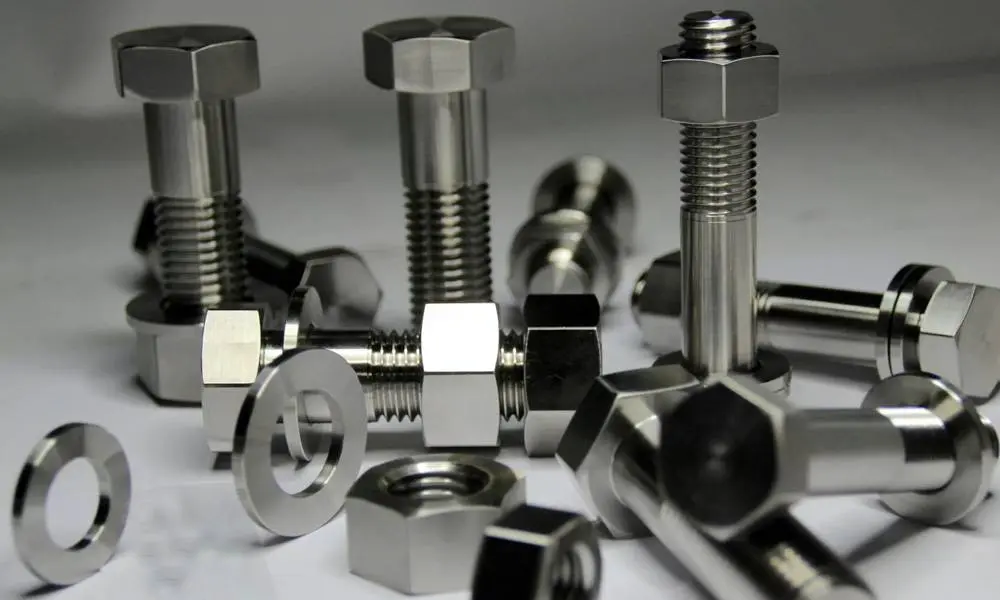
Stud bolts, hex bolts, nuts, washers and special fasteners in alloy steel, stainless steel, duplex and nickel alloys — with the grades, strengths, thread sizes, markings and coatings you need to specify them.
We supply stud bolts, hex bolts, heavy hex nuts, washers, socket head cap screws, threaded rods, U bolts and foundation bolts — in alloy steel for flange bolting, in stainless steel and duplex for corrosive service, and in nickel alloys, titanium and bronze for the most demanding joints.
Studs and nuts are supplied as matched sets to the grade your flanges and piping class call for, plain or coated. Every lot is marked with its grade and maker and supplied with a mill test certificate to EN 10204 Type 3.1 or 3.2. When your project needs independent verification, inspection by your nominated agency is carried out before dispatch.
Stud bolts and heavy hex nuts hold pressure joints together; the others fasten structures, equipment and pipe supports.
A rod threaded along its full length, fitted with a heavy hex nut at each end. The standard bolting for pipe flanges and pressure vessels.
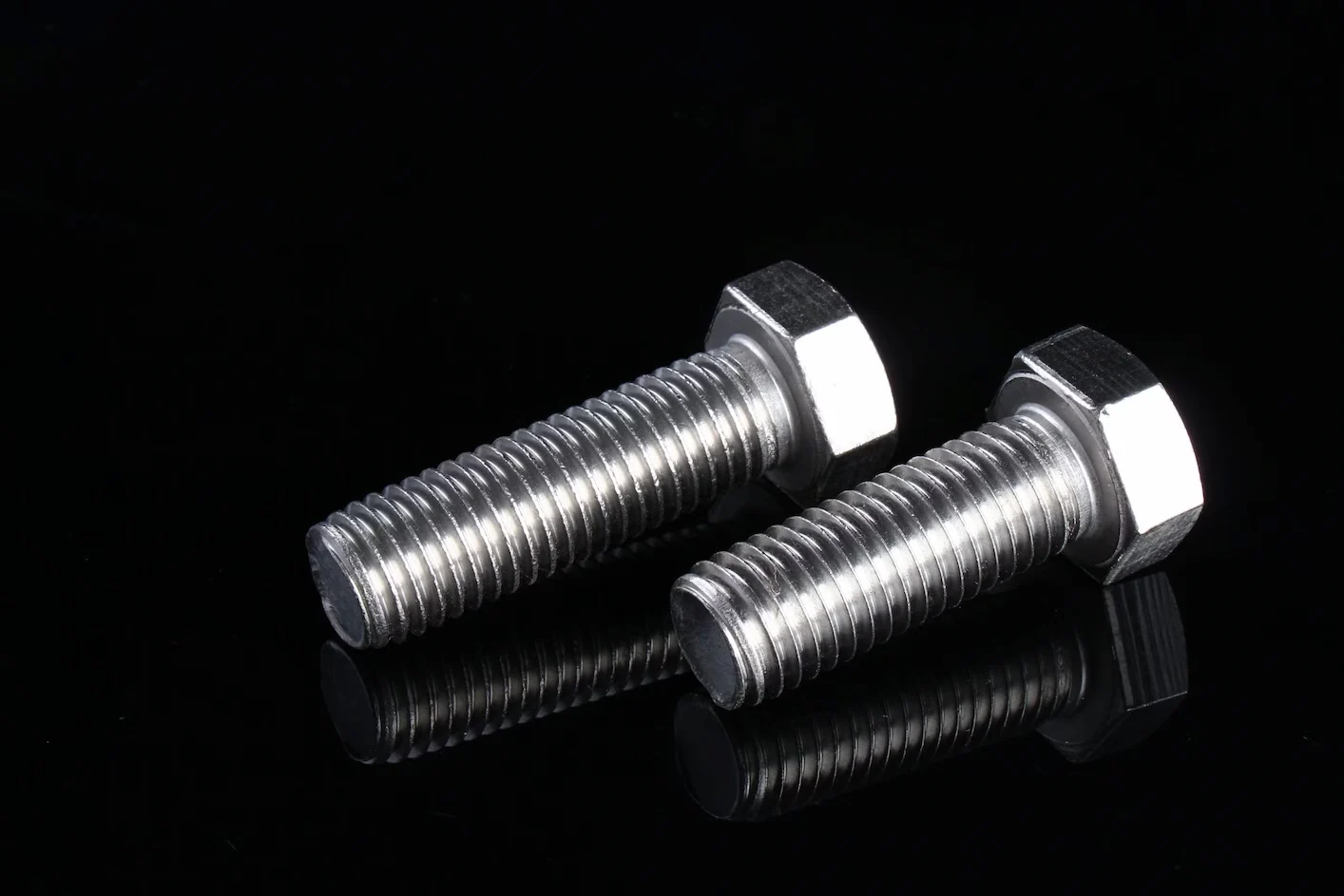
A bolt with a hexagon head, part or fully threaded. Used for structural steelwork, machinery and equipment.
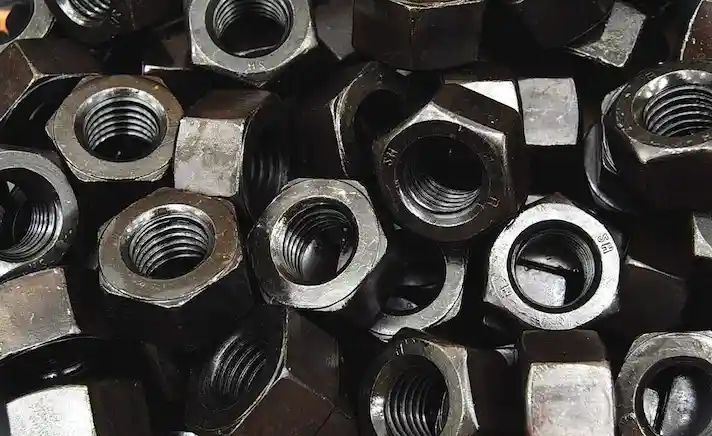
Thicker and wider across flats than a standard nut, to carry the full load of a high-strength stud. Supplied in the grade that matches the stud.
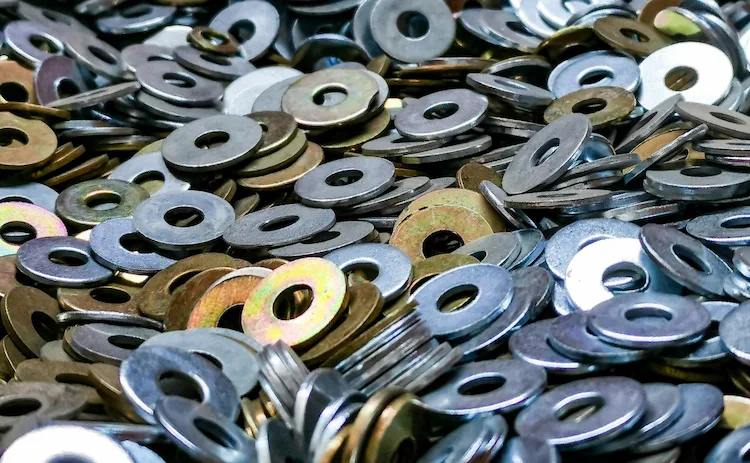
Flat washers spread the load under the nut; spring, lock and hardened washers resist loosening and protect the joint face.
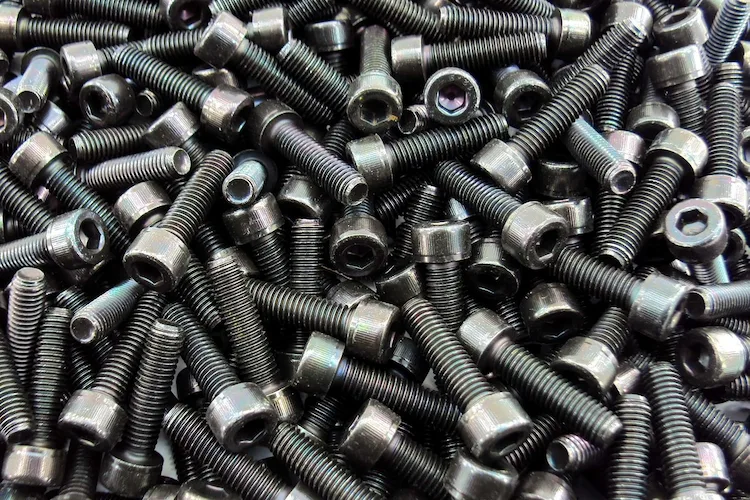
A cylindrical head driven by a hex key, for compact, high-strength joints in machines, dies and tools.
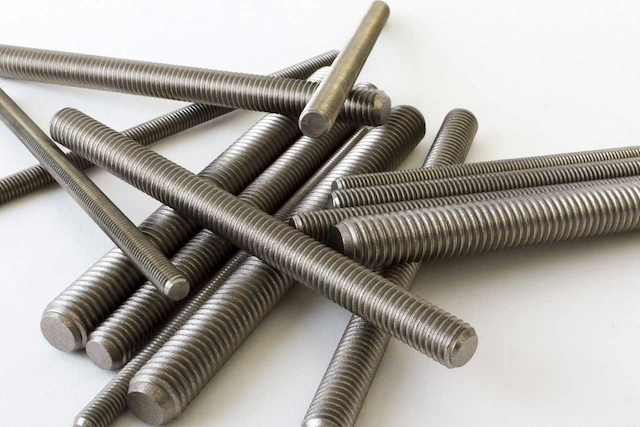
Rod threaded end to end, in lengths of 1 to 3 m, cut on site into studs and hangers.
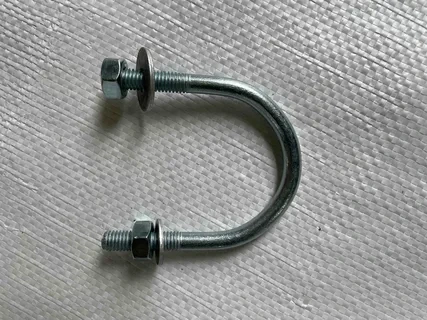
A rod bent into a U and threaded at both ends, to clamp pipe to its supports.
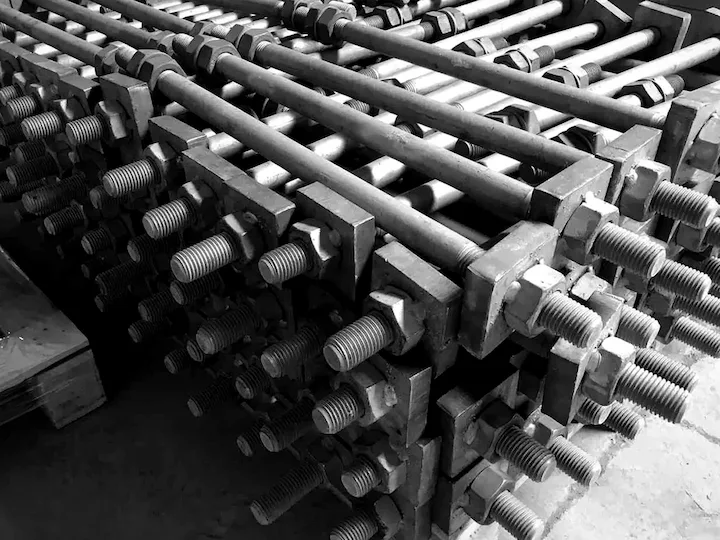
J, L and headed anchor bolts cast into concrete to hold down columns, equipment and machinery.
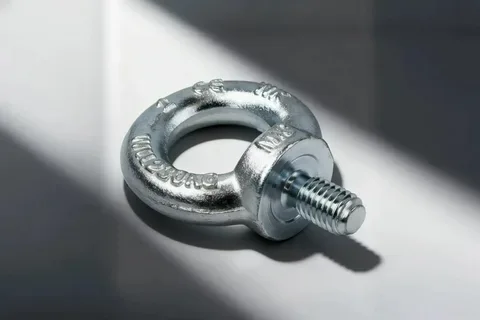
A forged bolt with a loop head, for lifting points on equipment and for rigging.
A bolt and a stud of the same length are not the same size: the length of each is measured in a different way. These are the dimensions to give on an enquiry.
For flange bolting, give the flange size, class and facing and we will work out the stud diameter, number and length. The bolt count and size for each flange are in the flange dimension chart.
A bolted joint is only as good as its weakest part, so each stud or bolt grade has a matching nut grade. Choose a family to see the pairs.
ASTM A193 studs with A194 nuts are the standard bolting for flanges in refinery, chemical and power plant piping.
| Stud grade | Material | Nut grade | Where it is used |
|---|---|---|---|
| A193 B7 | Cr-Mo alloy steel (4140), quenched & tempered | A194 2H | General flange bolting, to about 450 °C. |
| A193 B7M | As B7, hardness limited to 235 HBW | A194 2HM | Sour service and hydrogen-cracking risk. |
| A193 B16 | Cr-Mo-V alloy steel, quenched & tempered | A194 Gr. 4 or 7 | High-temperature flange bolting, beyond the range of B7. |
| A193 B6 | 13 % chromium stainless (410) | A194 Gr. 6 | Moderately corrosive and elevated-temperature service. |
ASTM A320 studs are impact tested at low temperature, for cold climates, refrigeration and cryogenic plant.
| Stud grade | Material | Nut grade | Where it is used |
|---|---|---|---|
| A320 L7 | Cr-Mo alloy steel, impact tested at −101 °C | A194 Gr. 7 or 4 | Low-temperature flange bolting. |
| A320 L7M | As L7, hardness limited | A194 Gr. 7M | Low-temperature sour service. |
| A320 L43 | Ni-Cr-Mo alloy steel (4340) | A194 Gr. 7 or 4 | Larger diameters at low temperature. |
| A320 B8 / B8M | Austenitic stainless, 304 / 316 | A194 Gr. 8 / 8M | Cryogenic service, such as LNG. |
A193 B8 grades for pressure bolting, in Class 1 (solution treated) or the stronger Class 2 (strain hardened); F593 and ISO 3506 grades for general stainless fastening.
| Stud / bolt grade | Material | Nut grade | Where it is used |
|---|---|---|---|
| A193 B8 Cl. 1 / Cl. 2 | 304 stainless | A194 Gr. 8 | Stainless flanges in water and mild chemical service. |
| A193 B8M Cl. 1 / Cl. 2 | 316 stainless | A194 Gr. 8M | Chemical, coastal and marine flange bolting. |
| A193 B8T | 321 stainless | A194 Gr. 8T | Stabilised grade for high temperature. |
| A193 B8C | 347 stainless | A194 Gr. 8C | Stabilised grade for high temperature. |
| F593 Gr. 304 / 316 | 304 / 316 stainless | F594 | General stainless bolts, screws and studs. |
| ISO 3506 A2-70 | 304 type stainless, 700 MPa | A2-70 | Metric fasteners for general and food equipment. |
| ISO 3506 A4-70 / A4-80 | 316 type stainless, 700 / 800 MPa | A4-70 / A4-80 | Marine and chemical environments. |
Carbon and alloy steel bolts graded by strength, for steel structures, machinery, anchoring and general fabrication.
| Bolt grade | Material | Nut grade | Where it is used |
|---|---|---|---|
| A307 Gr. A / B | Low carbon steel | A563 Gr. A | General bolting; Gr. B for cast iron flanges. |
| F3125 A325 | Medium carbon steel, quenched & tempered | A563 DH · A194 2H | High-strength structural steel connections. |
| F3125 A490 | Alloy steel, quenched & tempered | A563 DH · A194 2H | Heavily loaded structural connections. |
| ISO 8.8 | Carbon or alloy steel, quenched & tempered | Class 8 | General engineering and machinery. |
| ISO 10.9 | Alloy steel, quenched & tempered | Class 10 | High-strength machinery and friction-grip joints. |
| ISO 12.9 | Alloy steel, quenched & tempered | Class 12 | Socket head cap screws and highly stressed joints. |
| F1554 Gr. 36 / 55 / 105 | Carbon or alloy steel anchor rods | A563 · A194 2H | Foundation and anchor bolts in concrete. |
Studs and nuts machined from duplex and precipitation-hardening bar for seawater, offshore and high-temperature service. Nuts are made from the same grade as the stud.
| Grade | Material | Nut grade | Where it is used |
|---|---|---|---|
| Duplex 2205 | UNS S31803 / S32205 | Same grade | Seawater and offshore flange bolting. |
| Super Duplex 2507 | UNS S32750 / S32760 | Same grade | Subsea, seawater and firewater systems. |
| A453 Gr. 660 | Iron-nickel superalloy (A-286) | A453 Gr. 660 | High-temperature turbine and exhaust bolting. |
| 17-4PH (630) | Precipitation-hardening stainless, H1150 | Same grade | Valve and pump bolting needing strength and corrosion resistance. |
Bolts, studs and nuts for chemical, seawater and high-temperature service, machined from nickel-alloy bar.
| Alloy | UNS | Bar specification | Where it is used |
|---|---|---|---|
| Monel 400 | N04400 | B164 | Seawater and hydrofluoric acid service. |
| Monel K-500 | N05500 | B865 | High-strength marine and subsea bolting. |
| Inconel 625 | N06625 | B446 | Seawater and severe chemical service. |
| Inconel 718 | N07718 | B637 | High-strength, high-temperature and sour-service bolting. |
| Hastelloy C276 | N10276 | B574 | Wet chlorine and mixed acids. |
| Alloy 20 | N08020 | B473 | Sulphuric acid service. |
Light, non-magnetic or non-sparking fasteners for seawater, electrical and special applications.
| Material | UNS | Bar specification | Where it is used |
|---|---|---|---|
| Titanium Gr. 2 | R50400 | B348 | Seawater and chemical equipment. |
| Titanium Gr. 5 | R56400 | B348 | High strength at low weight. |
| Brass | C36000 | B16 | Electrical and decorative fasteners. |
| Silicon Bronze | C65100 / C65500 | B98 | Marine and electrical fasteners. |
| Aluminium Bronze | C63000 | B150 | Non-sparking and seawater fasteners. |
Swipe the table sideways to see every column
Use the nut grade listed with each stud; a weaker nut can strip before the stud reaches its full load. Bar grades for machined fasteners are on the Round Bars page.
The grade sets how strong the material is; the size sets how much load one fastener carries. Both charts use the minimum values of the standard.
MPa · bolting grades
Class 1 stainless studs are soft; where stainless bolting must carry a high load, Class 2 strain-hardened studs are used.
kN · stress area × minimum tensile strength
Load grows with the square of the diameter: an M36 bolt carries about ten times the load of an M12. Every size is in the thread table below.
| Grade | Specification | Size range | Tensile strength MPa | Yield strength, min MPa | Hardness, max HBW |
|---|---|---|---|---|---|
| ASTM pressure bolting | |||||
| B7 | ASTM A193 | To 64 mm (2½") | 860 min | 720 | 321 |
| B7M | ASTM A193 | To 100 mm (4") | 690 min | 550 | 235 |
| B16 | ASTM A193 | To 64 mm (2½") | 860 min | 725 | 321 |
| L7 | ASTM A320 | To 64 mm (2½") | 860 min | 725 | – |
| B8 · B8M Cl. 1 | ASTM A193 | All sizes | 515 min | 205 | 223 |
| B8 Cl. 2 | ASTM A193 | To 20 mm (3/4") | 860 min | 690 | 321 |
| B8M Cl. 2 | ASTM A193 | To 20 mm (3/4") | 760 min | 655 | 321 |
| A453 Gr. 660 Cl. A | ASTM A453 | All sizes | 895 min | 585 | – |
| Structural & general | |||||
| A307 Gr. A | ASTM A307 | All sizes | 415 min | – | – |
| A325 | ASTM F3125 | To 25 mm (1") | 830 min | 635 | – |
| A490 | ASTM F3125 | All sizes | 1040 – 1210 | 895 | – |
| 8.8 | ISO 898-1 | Over M16 | 830 min | 660 | – |
| 10.9 | ISO 898-1 | All sizes | 1040 min | 940 | – |
| 12.9 | ISO 898-1 | All sizes | 1220 min | 1100 | – |
| Stainless, ISO 3506 | |||||
| A2-70 · A4-70 | ISO 3506-1 | To M24 | 700 min | 450 | – |
| A4-80 | ISO 3506-1 | To M24 | 800 min | 600 | – |
Swipe the table sideways to see every column
Larger sizes of B7 and A325 have lower minimum strengths; the value for your size is reported on the mill test certificate. Class 8.8 up to M16 has a minimum tensile strength of 800 MPa.
Bolts, studs and nuts are stamped with their grade and the maker's mark, so the right parts can be checked on site. These are the markings you will see most.
Coarse-thread sizes with their pitch, the across-flats spanner size of the nut, the tensile stress area and the minimum breaking load. Switch between metric bolts and inch stud bolts.
| Size | Pitchmm | Across flatsmm, ISO nut | Stress areamm² | Breaking loadclass 8.8, kN | Breaking loadclass 10.9, kN |
|---|---|---|---|---|---|
| M6 | 1.0 | 10 | 20.1 | 16.1 | 20.9 |
| M8 | 1.25 | 13 | 36.6 | 29.3 | 38.1 |
| M10 | 1.5 | 16 | 58.0 | 46.4 | 60.3 |
| M12 | 1.75 | 18 | 84.3 | 67.4 | 87.7 |
| M14 | 2.0 | 21 | 115 | 92.0 | 119.6 |
| M16 | 2.0 | 24 | 157 | 125.6 | 163.3 |
| M20 | 2.5 | 30 | 245 | 203.4 | 254.8 |
| M22 | 2.5 | 34 | 303 | 251.5 | 315.1 |
| M24 | 3.0 | 36 | 353 | 293.0 | 367.1 |
| M27 | 3.0 | 41 | 459 | 381.0 | 477.4 |
| M30 | 3.5 | 46 | 561 | 465.6 | 583.4 |
| M33 | 3.5 | 50 | 694 | 576.0 | 721.8 |
| M36 | 4.0 | 55 | 817 | 678.1 | 849.7 |
| M39 | 4.0 | 60 | 976 | 810.1 | 1015.0 |
| M42 | 4.5 | 65 | 1120 | 929.6 | 1164.8 |
| M48 | 5.0 | 75 | 1470 | 1220.1 | 1528.8 |
| M56 | 5.5 | 85 | 2030 | 1684.9 | 2111.2 |
| M64 | 6.0 | 95 | 2680 | 2224.4 | 2787.2 |
Breaking load is calculated as stress area × minimum tensile strength: 800 MPa for class 8.8 up to M16 and 830 MPa above; 1040 MPa for class 10.9. Across flats to ISO 4032; some DIN sizes differ (M10: 17, M12: 19, M14: 22, M22: 32 mm).
| Sizeinch | Threadsper inch | Series | Heavy hex nut AFinch · mm | Nut heightinch | Stress areamm² | Breaking loadB7, kN |
|---|---|---|---|---|---|---|
| 1/2 | 13 | UNC | 7/8 · 22.2 | 31/64 | 91.5 | 78.7 |
| 5/8 | 11 | UNC | 1 1/16 · 27.0 | 39/64 | 145.8 | 125.4 |
| 3/4 | 10 | UNC | 1 1/4 · 31.8 | 47/64 | 215.5 | 185.3 |
| 7/8 | 9 | UNC | 1 7/16 · 36.5 | 55/64 | 298.1 | 256.3 |
| 1 | 8 | UNC | 1 5/8 · 41.3 | 63/64 | 391.0 | 336.2 |
| 1 1/8 | 8 | 8UN | 1 13/16 · 46.0 | 1 7/64 | 509.7 | 438.3 |
| 1 1/4 | 8 | 8UN | 2 · 50.8 | 1 7/32 | 645.2 | 554.8 |
| 1 3/8 | 8 | 8UN | 2 3/16 · 55.6 | 1 11/32 | 795.5 | 684.1 |
| 1 1/2 | 8 | 8UN | 2 3/8 · 60.3 | 1 15/32 | 962.6 | 827.8 |
| 1 3/4 | 8 | 8UN | 2 3/4 · 69.9 | 1 23/32 | 1341.9 | 1154.1 |
| 2 | 8 | 8UN | 3 1/8 · 79.4 | 1 31/32 | 1787.1 | 1536.9 |
Stud bolts for flanges use UNC thread up to 1" and the 8-thread series (8UN) above, as ASME B16.5 requires. B7 breaking load is stress area × 860 MPa, the minimum up to 2½".
Swipe the table sideways to see every column
A coating protects carbon and alloy steel bolting from corrosion, and some coatings also make the joint easier to tighten and to take apart.
As heat treated, with a dark oxide surface and a light oil. The standard supply condition of B7 studs.
Best forIndoor and insulated joints, and bolting that will be coated later
A thin, bright zinc layer with a clear or coloured passivation. Mild protection for indoor use.
StandardASTM F1941 · ISO 4042
Dipped in molten zinc for a thick, durable coating. Nuts are tapped oversize after galvanising to fit.
StandardASTM F2329 · A153 · ISO 10684
An electroplated zinc-nickel alloy that lasts several times longer than plain zinc in salt spray.
StandardASTM B841
A fluoropolymer coat over a phosphate base, usually blue or green. Resists corrosion and makes tightening and removal easier.
Best forOffshore, coastal and chemical plant flange bolting
A matt grey zinc or manganese phosphate, sealed with oil. Mild protection and a good base for other coatings.
StandardASTM F1137
High-strength fasteners of about 1000 MPa and above can be embrittled by electroplating; for these, mechanical or non-electrolytic coatings are used. The swatches are drawings that suggest each coating.
A starting point for choosing the grade. The flange material, service temperature and environment decide the bolting; tell us those and we will quote the right sets.
| Joint | Typical choice | Why |
|---|---|---|
| Carbon steel flanges, general service | A193 B7 · A194 2H | The standard high-strength flange bolting. |
| Sour service, NACE MR0175 | A193 B7M · A194 2HM | Hardness limited to resist sulphide stress cracking. |
| Low temperature | A320 L7 · A194 Gr. 7 | Impact tested for toughness in the cold. |
| Cryogenic, LNG | A320 B8 / B8M · A194 8 / 8M | Austenitic stainless stays tough at very low temperature. |
| High temperature | A193 B16 · A453 Gr. 660 | Keep their strength and resist relaxation when hot. |
| Stainless flanges, strong joint | A193 B8M Cl. 2 · A194 8M | Strain hardened for high load, 316 for corrosion. |
| Seawater and offshore | Duplex · Super duplex · Monel K-500 · PTFE-coated B7 | Resist chloride corrosion in splash and immersion. |
| Structural steel connections | F3125 A325 / A490 · ISO 8.8 / 10.9 | High-strength, pre-tensioned structural bolting. |
| General machinery | ISO 8.8 · 10.9 · 12.9 | Strength graded to the load. |
| General stainless assemblies | ISO A2-70 · A4-80 | Corrosion-resistant fasteners for plant and equipment. |
| Foundations and anchors | F1554 · IS 5624, galvanised | Anchor rods cast into concrete, protected against corrosion. |
| Cast iron flanges | A307 Gr. B | Low strength, so it cannot overload a brittle flange. |
Swipe the table sideways to see every column
This guide is for orientation only. Bolting selection depends on the full service conditions and the governing piping or structural code, and remains the responsibility of the design engineer.
Every lot is traceable to its heat and leaves with its mill test certificate. These tests are arranged when your order calls for them.
Both are ASTM A193 chromium-molybdenum alloy steel studs. B7M is tempered to a lower strength with a maximum hardness of 235 HBW and every stud is hardness tested, so it is suitable for sour service to NACE MR0175. B7 is stronger, with a minimum tensile strength of 860 MPa up to 64 mm diameter, and is the standard stud for general flange bolting. B7M is used with 2HM nuts, and B7 with 2H nuts.
It is the ISO 898-1 strength class stamped on the bolt head. The first number times 100 is the nominal tensile strength in MPa, and the second number is the ratio of yield to tensile strength. So 8.8 means a nominal tensile strength of 800 MPa and a yield of 80 percent of that, 640 MPa; 10.9 means 1000 MPa and 900 MPa. See the markings.
For flange stud bolts to ASME B16.5, the length is measured along the threaded length, excluding the chamfered points at each end. The length of a hex bolt is measured from the underside of the head to the end of the bolt. See the drawing.
Under ISO 3506, A2 is an austenitic stainless steel of the 304 type, and A4 contains molybdenum, like type 316, for better resistance to chlorides and seawater. The number after it is the strength: 70 means 700 MPa tensile strength and 80 means 800 MPa.
No. Hot-dip galvanising adds a thick zinc layer to the bolt thread, so galvanised bolts need nuts that are tapped oversize after galvanising. Bolts and nuts should be supplied as galvanised sets. See the coatings.
Fasteners are supplied with a mill test certificate to EN 10204 Type 3.1 or 3.2, traceable to the heat or lot number, with the mechanical and hardness test results and any coating reports ordered. When third-party inspection is called for, the agency's inspection release note is included. More on our quality & inspection page.
Flanges, pipe, fittings and valves in matching grades, so every joint comes from one supplier with one set of documents.
Send the fastener type, size, grade and coating, or your flange list. We will confirm availability and quote matched sets, with the mill test certificate and inspection you need.